The bucket years
The damage doesn’t stop while a claim waits
By Andrew Crane ·
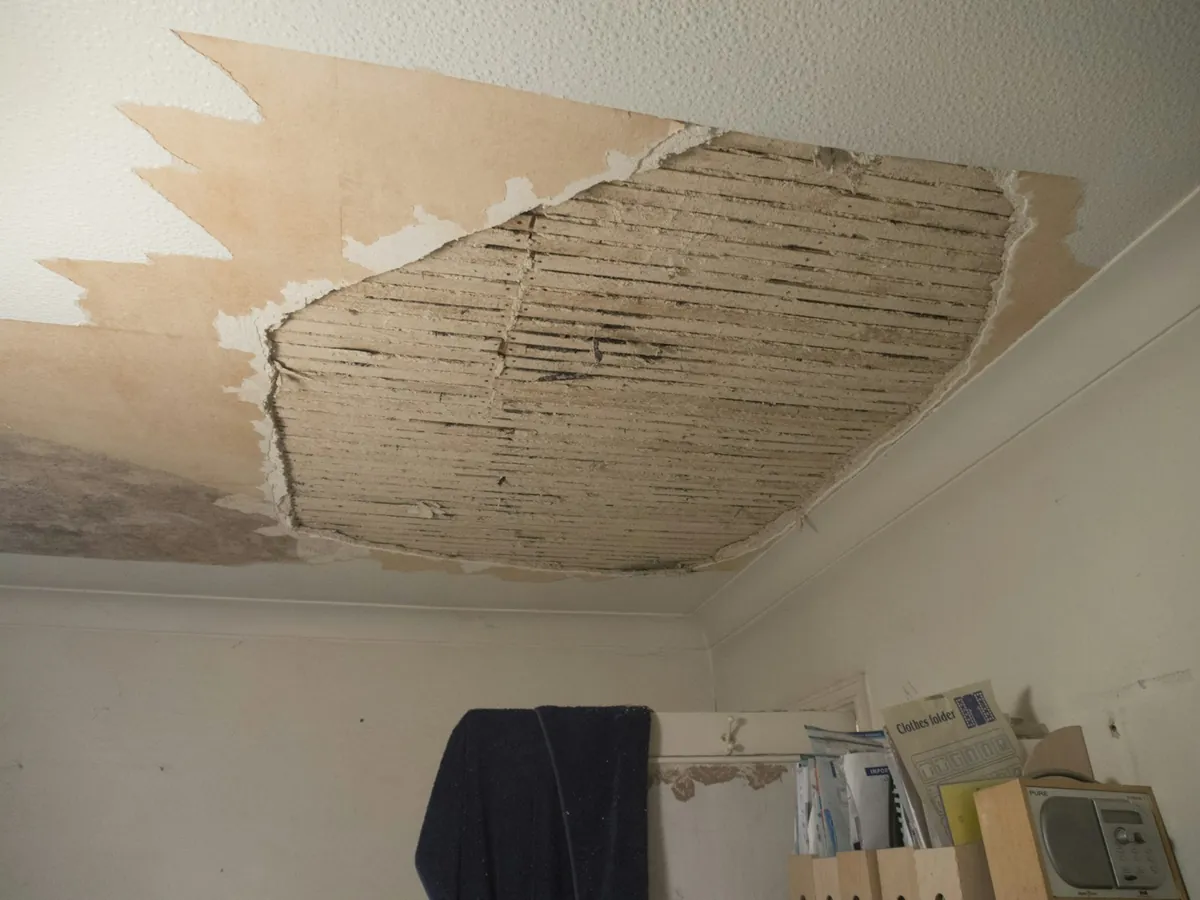
A delayed claim does not stop the rot. Water keeps coming in. Ceilings sag. Mould spreads. By the time the insurer gets around to it, the damage is worse than it was when the claim went in — and the family usually has to live in it while it decays around them.
Anchor: ASIC v Hollard [2026] FCA 1487, paragraphs 54 to 64 and 109 to 113; ASIC Report 768, Navigating the storm (August 2023).
A short natural history of a leak
The Hollard judgment reads, in places, like a building-science lesson told in reverse. Here is the sequence, every step dated in the court’s reasons.
November 2021. The plumber finds cracked tiles under a toppled hot-water service and bowing trusses. Water is coming in over the son’s bed. The claim manager tells head office “there is still water ingress from the damaged roof that we cannot stop until the repairs are carried out” (paragraph 34).
January 2022. The claim manager’s report warns that “further damage to the ceiling, insulation and bedroom may occur until repairs were carried out” (paragraph 36).
April 2022. Water is now leaking into the study. The family are emptying buckets through the night. The lounge ceiling is sagging under wet insulation and the plaster is cracking (paragraphs 58 and 59).
31 May 2022. Two emails from the family in one evening: “water is leaking into the bedroom and getting worse … I have sent numerous emails and getting no response” (paragraph 60).
Late June 2022. The lounge and garage ceilings fall in. The wood-fire flue is wrecked. The house is too wet to run electric heaters safely through a Victorian winter (paragraph 67).
September 2022. Black mould on the bed, the bedroom walls, “other areas where there was moisture”. The insurer’s advice: wipe it with vinegar (paragraph 110).
March 2023. An independent engineer tells the family to get out within hours; he thinks the roof could come down (paragraph 74).
The house was eventually judged not worth repairing (paragraphs 119 to 121).
Is this the norm, not the exception?
ASIC’s 2023 review of 218,256 home claims put it in regulator’s prose: severe weather, supply shortages and under-resourced claims teams produced long gaps between lodgement and first repair, and policyholders bore the consequences (REP 768, pages 4 to 5). The Victorian financial counsellors who wrote Unsettled in 2024 described “long gaps between insurer communications with households, repeated mistakes in assessments of damage, long spells in temporary accommodation” as the everyday reality of their casework (page 10).
Comment
It’s impossible to say what the insurer was thinking in this case, and the judge did not find a motive. What she did find is that some of the conduct “cannot be explained simply as the product of staff busyness or poor communication with suppliers” (paragraph 177). So the question is fair to ask. Were claims managers quietly assuming that a family living in those conditions would be motivated to accept a small cash settlement? Could they have been thinking that the longer it was left, the more pressure the family would be under? It’s easy to see how possible that is when you consider the insurer’s business model.
Nobody decided anything, for months, and a house with a hole in the roof does not wait politely for a decision. It keeps deteriorating.
Here is the maths that ought to worry shareholders as much as customers. A roof repair in November 2021 was a quote for ridge tiles and a hot-water service. By 2024 it was a total loss, two cash settlements and more than $240,000 in temporary accommodation (judgment, paragraph 122). Delay is not free. It just moves the bill down the line, and in the meantime it is paid in buckets, by the people under the roof.
It suggests insurers think something like this: if we delay, deny and defend ten claims, nine will give up and we will still be ahead, even after paying the extra costs on the one that fought on. It shouldn’t be this hard for families who fork out huge premiums and are often loyal to their insurer for decades, and it certainly doesn’t pass the pub test. The regulators well know the problems exist, but change is glacial.
Sources
- ASIC v Hollard Insurance Partners Limited [2026] FCA 1487, paragraphs 16, 34, 36, 54 to 64, 67, 74, 109 to 113, 119 to 122, 177.
- ASIC Report 768, Navigating the storm: ASIC’s review of home insurance claims, August 2023, pages 4 to 5.
- Financial Counselling Victoria, Unsettled: Climate Risk and Cash Settlements in Home Insurance, August 2024, page 10.